The 2-Hour Workout Problem: What Happens When Training Volume Goes Beyond What Your Nutrition Supports
Somewhere in the last year, your gym sessions quietly grew. What used to be 50 focused minutes is now a 100-minute block with supersets, extra accessory work, and a "just one more exercise" habit that's crept in without a plan behind it. Your training log looks more impressive. Your plate looks exactly the same as it did eight months ago. That gap - training volume climbing while intake stays flat - is where a lot of stalled progress quietly starts.
Why It Matters: Volume and Nutrition Aren't Separate Variables
Training volume is a demand on your body. Nutrition is the supply that lets your body meet that demand and adapt to it. When volume increases and food intake doesn't scale with it, you're not training harder in a way that produces more - you're accumulating a debt. Excessive training loads combined with inadequate recovery are the defined mechanism behind overreaching and, if sustained, overtraining syndrome, which shows up as a genuine decline in performance capacity, not just a plateau.
Myths Worth Dropping
| Myth | Reality |
|---|---|
| More training time always means more progress, as long as you're consistent | Volume without matching recovery capacity is a well-documented driver of overreaching - a state defined by declining performance despite continued, or increased, training effort |
| If you're not gaining weight, you can't be undereating for your training | Someone can be eating what feels like a lot and still be running a functional deficit relative to a training volume that's quietly doubled over months |
| Protein alone can prevent overtraining if volume gets too high | Protein and carbohydrate co-ingestion supports recovery, but research on elite endurance training camps has found protein and carbohydrate intake alone insufficient to prevent overtraining when training load itself is excessive |
| A longer session is automatically a more productive one | Weekly volume, not any single session's length, is what drives adaptation - a 2-hour session run on depleted glycogen and inadequate recovery can produce less usable stimulus than a focused 60-minute one |
| Feeling fine during a session means your nutrition is keeping up | Overreaching often shows up first as a training-specific performance stagnation or decline, not as how a session subjectively feels in the moment |
What Actually Happens When Volume Outpaces Intake
Glycogen Runs Out Mid-Session
Muscle glycogen is the primary fuel for training above roughly 60–65% of maximum effort - which covers nearly every working set that matters. A 2-hour session run on the same carbohydrate intake that used to support 60 minutes will, at some point, run the tank dry. The back half of the session doesn't feel like the front half, and the training stimulus in those final sets is genuinely lower quality, even if the weight on the bar looks the same on paper.
Muscle Protein Breakdown Accelerates
The longer and more demanding a session runs without matching amino acid and calorie availability, the more your body pulls from existing muscle tissue to keep going. This isn't an immediate, dramatic effect - it's a slow accumulation across weeks of sessions that outrun what you're eating around them.
Recovery Between Sessions Gets Shorter, Not Longer
More volume should, logically, demand more recovery time. In practice, most people extend session length without extending rest days or adjusting frequency - compounding the mismatch instead of managing it.
Immune Function and Illness Susceptibility Rise
Excessive training load paired with inadequate recovery is linked to declining immune function alongside the performance drop, part of why people in a genuine overreaching state tend to get sick more often during heavy training blocks.
Performance Stagnates or Declines - Even Though Effort Is Increasing
This is the part that confuses people most. You're training more, not less, and your numbers are going sideways or backward. Overreaching is specifically characterized by a training-specific performance decrement despite - or because of - the added load, which is the opposite of what more training time is supposed to produce.
The Nutrition Math That Usually Gets Missed
When session length or weekly volume increases meaningfully, three things typically need to scale with it, and most people only remember one:
- Total calories. A longer, harder session burns more, and a body running a bigger training deficit needs a correspondingly bigger intake to avoid a growing energy shortfall.
- Carbohydrate specifically, since glycogen availability is the direct fuel constraint for sessions pushing past the 75–90 minute mark.
- Protein, scaled to the higher end of your range (closer to 2.0–2.2g/kg) when training volume climbs, since more total training stress means more tissue turnover to support.
Most people who extend their sessions adjust none of these, or adjust protein slightly while leaving calories and carbohydrate exactly where they were when their sessions were 45 minutes shorter.
Who This Shows Up For Most
Anyone who's added volume gradually without noticing. An extra exercise here, a few more sets there, over months - the total climbs without ever feeling like a deliberate decision.
Intermediate lifters chasing progress through duration. When straightforward progressive overload starts feeling slow, adding time in the gym feels like the obvious lever, even when it isn't matched by more fuel.
Those training fasted or on light meals before long sessions. Starting a 2-hour session already glycogen-limited compounds the mismatch from minute one.
People tracking training hard and nutrition loosely. A detailed training log next to an untracked diet is one of the most common patterns behind this exact problem.
How to Actually Close the Gap
- Audit your actual weekly training volume, not just how long sessions feel. Total sets, total time, and frequency all matter more than any single day.
- Scale carbohydrate intake to session length, particularly for anything running past 75–90 minutes - this is the most commonly under-adjusted variable.
- Move protein toward the higher end of your range (roughly 2.0–2.2g/kg) once weekly volume climbs meaningfully.
- Check whether recovery time actually increased alongside volume. If sessions got longer but rest days didn't, that's the second half of the mismatch.
- Watch for the real signal: stagnating or declining performance, not how tired you feel. Feeling fine is not the same as recovering adequately.
How Muscle Reign Fits Into This
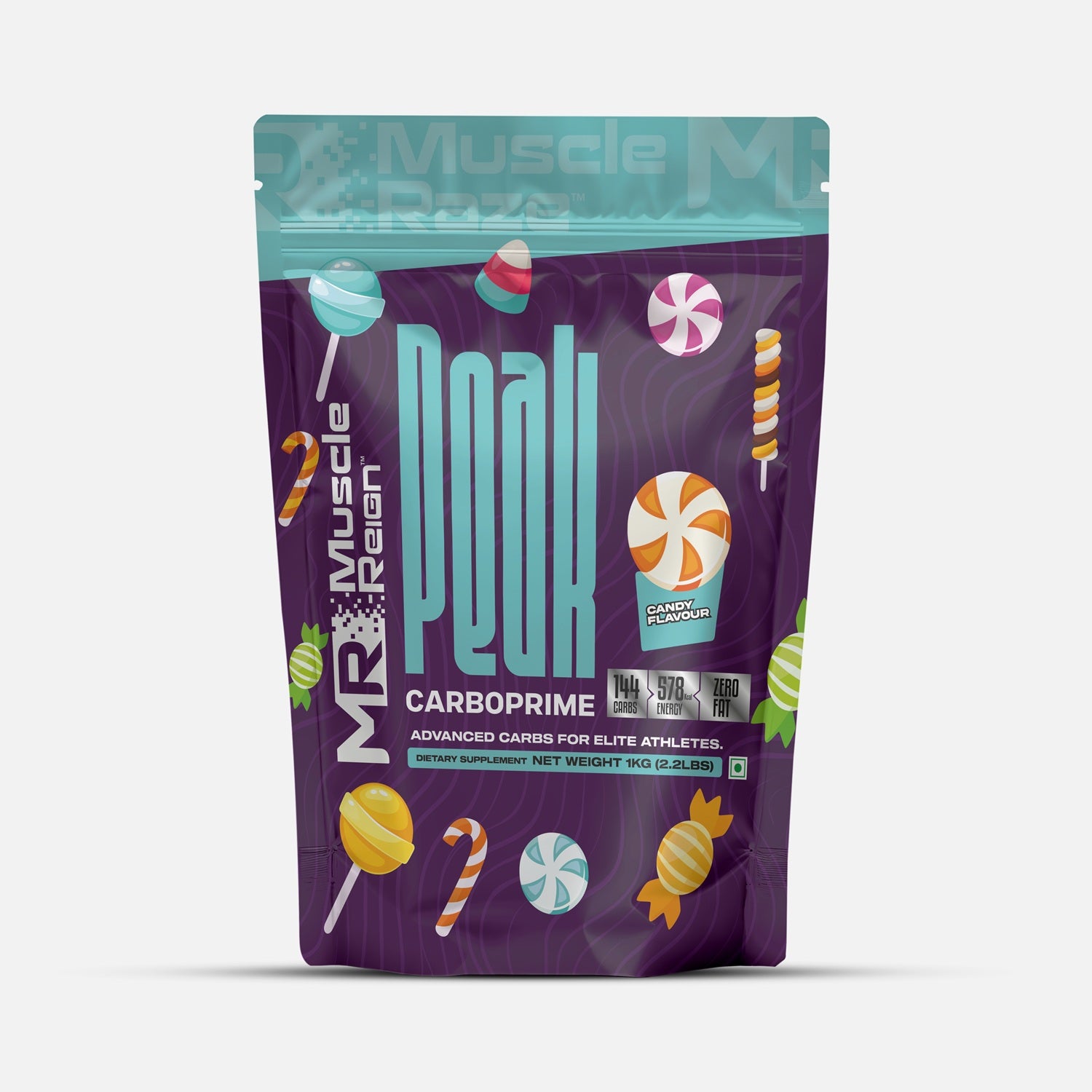
The mismatch this article describes is fundamentally a fuel problem, not a discipline problem - which is exactly why it needs to be solved with intake, not more willpower in the gym. Peak Carboprime exists for the specific scenario where session length has outgrown what a normal meal schedule delivers: a serving in the pre-workout window tops up available glycogen before a longer session begins, and a second serving post-workout drives the fastest phase of glycogen resynthesis rather than leaving that window to a dinner that's still two hours away.
On the protein side, Peak Series Whey Concentrate makes it easier to move toward the higher end of your protein range once weekly volume increases, without requiring a fourth full meal to get there. Neither product fixes an actual programming problem - if your volume has outgrown your recovery capacity structurally, that's a training-plan conversation. But for the nutrition side of the mismatch specifically, these are built for exactly this gap.
Common Mistakes People Make
- Extending session length gradually without ever recalculating calorie or carbohydrate needs
- Adjusting protein slightly while leaving total calories and carbs untouched
- Assuming feeling "fine" during training means nutrition is keeping pace
- Adding volume without adding recovery time or frequency adjustments
- Blaming a plateau on programming or genetics before checking whether intake matches training load
Possible Considerations
Persistent performance decline, unusual fatigue, disrupted sleep, or frequent illness during a period of increased training volume can indicate overreaching or, if sustained, overtraining syndrome - a genuine physiological state that may need a structured reduction in training load, not just more food, to resolve. Anyone experiencing these symptoms alongside a demanding training block should consider a deload and, if symptoms persist, a conversation with a physician or sports physiotherapist.
Frequently Asked Questions
How do I know if my training volume has outgrown my nutrition? The clearest signal is training-specific performance stagnating or declining despite consistent or increased effort - not how a session subjectively feels. If your lifts have gone sideways over several weeks while your training log shows more volume, that's the pattern to check first.
Can I just add more protein to fix this? Not on its own. Research on high-volume training camps found protein and carbohydrate intake alone insufficient to prevent overtraining when the underlying training load itself was excessive - nutrition supports recovery, but it can't fully offset a genuine mismatch between volume and recovery capacity.
Why do my later sets in a long session feel so much weaker than my earlier ones? This is often glycogen availability declining through the session, particularly past the 75–90 minute mark, rather than motivation or fatigue in the usual sense. Carbohydrate intake before and during longer sessions directly addresses this.
Is a 2-hour workout automatically too long? Not inherently - the issue isn't session length by itself, it's whether calorie, carbohydrate, and protein intake have scaled to match it. A well-fuelled 2-hour session can be entirely appropriate for the right training phase and goal.
What's the difference between overreaching and just being tired? Overreaching is specifically defined by a training-specific performance decrement that persists despite continued effort, sometimes alongside immune suppression and mood changes. Ordinary tiredness from a hard session typically resolves with normal rest; overreaching requires days to weeks of reduced load to fully recover from.
Should I eat more or train less if I'm in this situation? Both are legitimate levers, and which one to prioritize depends on whether the mismatch is primarily nutritional (fixable by scaling intake) or structural (volume has genuinely outgrown your recovery capacity, requiring a deload). Auditing your actual weekly volume and intake side by side is the first step to knowing which applies.
The Honest Answer
A longer, harder training log looks like progress on paper, but volume is only useful if your body has the fuel to actually turn it into adaptation. When session length climbs and intake stays flat, you're not training harder in any way that counts - you're quietly running a deficit your training log doesn't show. The fix isn't complicated: scale carbohydrate and calories to match what you're actually asking your body to do, and treat a stalling performance trend as a nutrition-and-recovery question before assuming it's a training-plan problem.
Ready to Fuel the Sessions You're Actually Running?
Explore Muscle Reign's Peak Carboprime and Whey Protein range at www.musclereign.com and match your plate to the training volume your log says you're doing.