The Carbohydrate Supplement Truth Indian Gym Culture Gets Completely Wrong
It is a Tuesday evening at a gym somewhere in Gurgaon. A guy who has been training consistently for two years is halfway through his pull session — fourth set of rows, weight that should feel manageable — and he is grinding. Not the good kind of grinding. The kind where the bar feels heavier than last week, the pump is not coming, and by the time he gets to pulldowns his form has quietly collapsed. He will blame sleep. He will blame stress. He will not think about the fact that his last meal was at 1:30 PM, it is now 7:45 PM, and he has been running on nothing but two cups of chai and a packet of biscuits since lunch.
The carbohydrate supplement for performance conversation in India does not really happen in most gyms. Protein is understood — even if the quantity is usually wrong. Creatine has slowly earned its place. But carbohydrate supplementation gets dismissed as either unnecessary ("just eat your rice") or actively counterproductive ("bhai, carbs se fat badhta hai"). Both positions ignore what is actually happening inside muscle tissue during a hard training session.
Glycogen — the form in which your muscles store carbohydrates — is the primary fuel for anything above 60–65% of maximum effort. That includes almost every set of resistance training that matters. When it runs low, output drops, recovery between sets slows, and the training signal that drives adaptation weakens. You can be adequately hydrated, adequately proteined, and adequately motivated — and still have a session that goes nowhere, purely because your muscles ran out of fuel two-thirds of the way through.
Myths Worth Dropping
Myth: Carbs make you fat — so the less you eat around training, the leaner you stay.
Reality: Fat accumulation is driven by sustained caloric surplus, not by carbohydrate intake in isolation. A 2021 review in Cell Metabolism found no meaningful difference in fat gain between high-carb and high-fat diets when total calories were matched. The carbohydrate you consume around training is almost entirely directed toward glycogen replenishment — it does not sit around waiting to become fat.
Myth: Rice and roti before training covers your carbohydrate needs for the session.
Reality: It depends entirely on timing and volume. A meal eaten at 1 PM provides usable blood glucose for roughly 3–4 hours. Training at 7 PM means that meal's contribution to your session fuel is close to zero. Stomach fullness and actual glycogen availability are not the same thing.
Myth: Carb supplements are only relevant for marathon runners and cyclists.
Reality: Resistance training is glycolytic — it relies on carbohydrate oxidation for the vast majority of its energy demands. A 2020 paper in the Journal of Strength and Conditioning Research confirmed that muscle glycogen depletion occurs measurably during standard hypertrophy-protocol resistance sessions (4 sets × 10 reps, multiple exercises). Endurance athletes are not the only ones running on empty.
Myth: Protein post-workout covers recovery — carbs are optional.
Reality: Protein and carbohydrates solve different recovery problems. Protein provides amino acids for muscle repair. Carbohydrates restore the glycogen that determines how ready your muscles are for the next session. Skipping post-workout carbohydrates does not slow protein synthesis — but it does mean your next session starts from a depleted fuel state, and that compounds across the training week.
Myth: Flavoured carb supplements are just sugar with colouring.
Reality: Formulation and carbohydrate source matter significantly. A well-designed carbohydrate supplement delivers fast-absorbing glucose polymers or dextrose that spike insulin in the post-workout window — which is a feature, not a bug, since insulin is the primary driver of glycogen resynthesis. The form in which carbohydrates are delivered affects absorption rate, gastric comfort, and recovery speed.
What the Research Actually Shows
Glycogen Availability Directly Determines Training Output
The relationship between muscle glycogen and resistance training performance is not theoretical — it is measurable from set to set. A 2019 study in the European Journal of Applied Physiology found that subjects training in a glycogen-depleted state produced significantly lower peak power and completed fewer total reps across a standardised training protocol compared to glycogen-replete subjects, despite identical motivation and effort levels. The muscle simply could not contract at the same intensity when fuel was unavailable. For Indian gym-goers regularly training 5–6 hours after their last meal, this is not an edge-case scenario — it is a Tuesday.
Post-Workout Carbohydrates Accelerate Glycogen Restoration Dramatically
The rate of glycogen resynthesis after exercise is highest in the first 30–45 minutes post-training — a window often called the "glycogen synthesis window." A 2022 paper in Sports Medicine confirmed that consuming fast-absorbing carbohydrates within this window accelerated muscle glycogen restoration by 3 to 4 times compared to waiting 2 hours. For someone commuting home after a gym session and eating dinner 90 minutes later, the practical implication is clear: waiting for a home-cooked meal is not an equivalent substitute for taking pre workout carbs or a post-workout carbohydrate supplement immediately after training.
Carbohydrates and Protein Together Produce Superior Recovery to Either Alone
Co-ingestion of carbohydrates and protein post-workout does more than simply combine their individual benefits. A 2020 meta-analysis in the International Journal of Sport Nutrition and Exercise Metabolism found that insulin response — which drives both glycogen synthesis and muscle protein synthesis — was significantly higher when carbohydrates and protein were consumed together versus either macronutrient alone. The practical upshot: your post-workout window is not the time to choose between carbs and protein. It is the time to take both, and let the synergistic insulin response do the work it is designed to do.
What This Means for Your Training Day
The Indian training schedule creates a specific problem: the gap between the last real meal and the training session is almost always longer than it should be. This is not a discipline failure — it is geography, commute time, and the reality of desk-job schedules. The solution is not to force an additional meal into a day that does not have space for one. It is to use carbohydrate supplementation strategically at the two points where it makes the most difference.
Pre-Workout — 20–30 Minutes Before Training
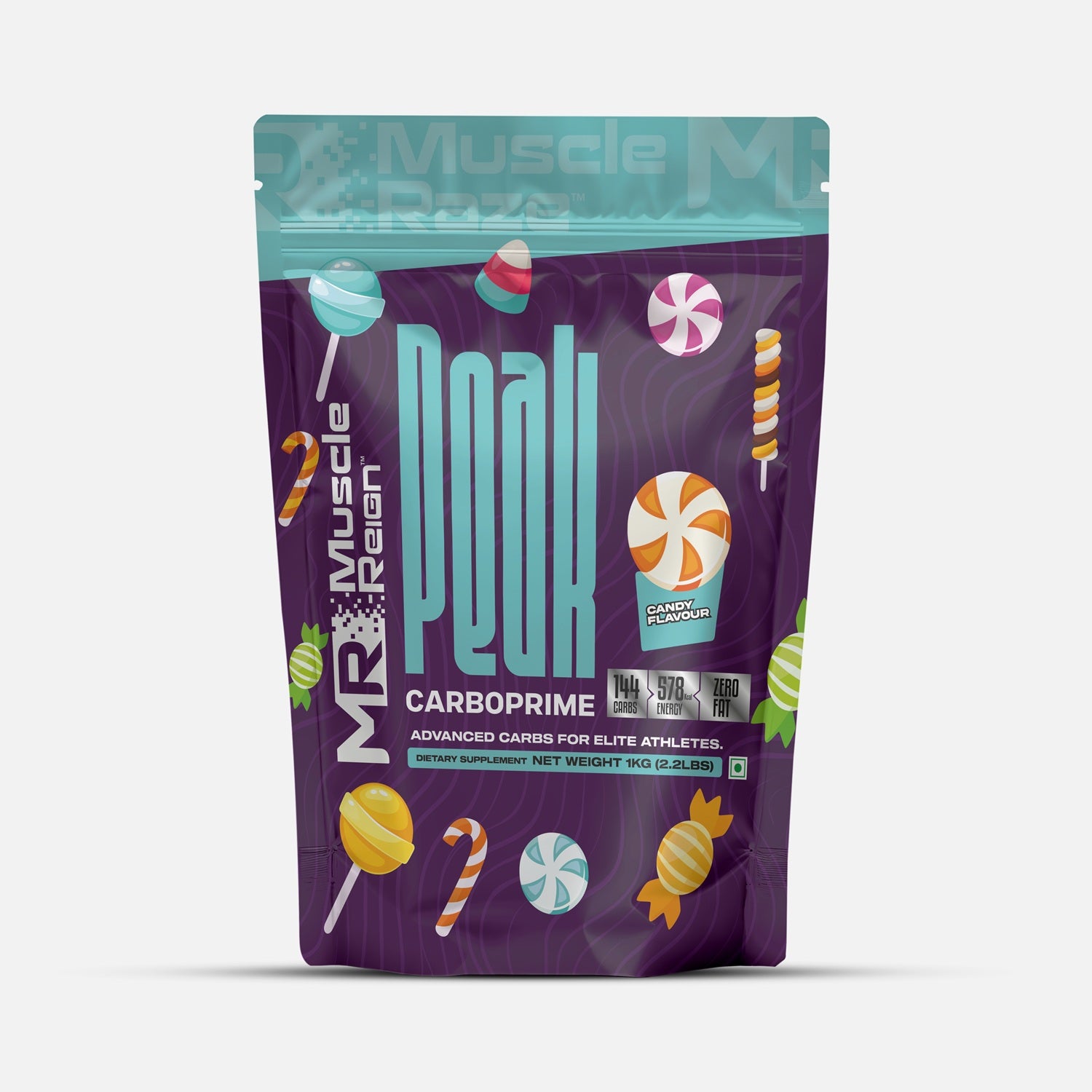
One serving of Peak Carboprime mixed in 400–450 ml of cold water tops up available blood glucose before the session begins. This is not about feeling a rush of energy — it is about making sure your glycolytic system has substrate available when you start working at real intensity. Chocolate and Mango both mix cleanly and are light enough on the stomach that you are not training with a full gut.
Post-Workout — Within 30 Minutes Of Finishing
This is the more critical window. The same serving here drives the insulin spike that initiates glycogen resynthesis at its fastest possible rate. If you are also taking whey protein post-workout, mix them together — the combined insulin response is meaningfully better than either alone, as the research above confirms.
On Heavy Volume Days — Legs, Back, Full-Body Sessions
Consider a half serving intra-workout — sipped during rest periods from your training bottle. Sessions that run 75–90 minutes and involve multiple compound movements genuinely deplete glycogen at a rate that mid-session supplementation addresses. This is standard practice for serious athletes that Indian recreational gym culture has not widely adopted yet.
Why Most Indian Athletes Are Under-Fuelling Their Sessions Without Knowing It
The problem with glycogen depletion is that it does not feel the way people expect it to. You do not suddenly hit a wall like a marathon runner at kilometre 35. It is subtler — sets that feel heavier than they should, a rep count that drops quietly by one or two without a clear reason, a recovery between sets that takes 30 seconds longer than usual. Most people attribute this to a bad day, low sleep, or life stress. Sometimes those things are true. But chronic under-fuelling around training produces exactly this pattern, consistently, across every session.
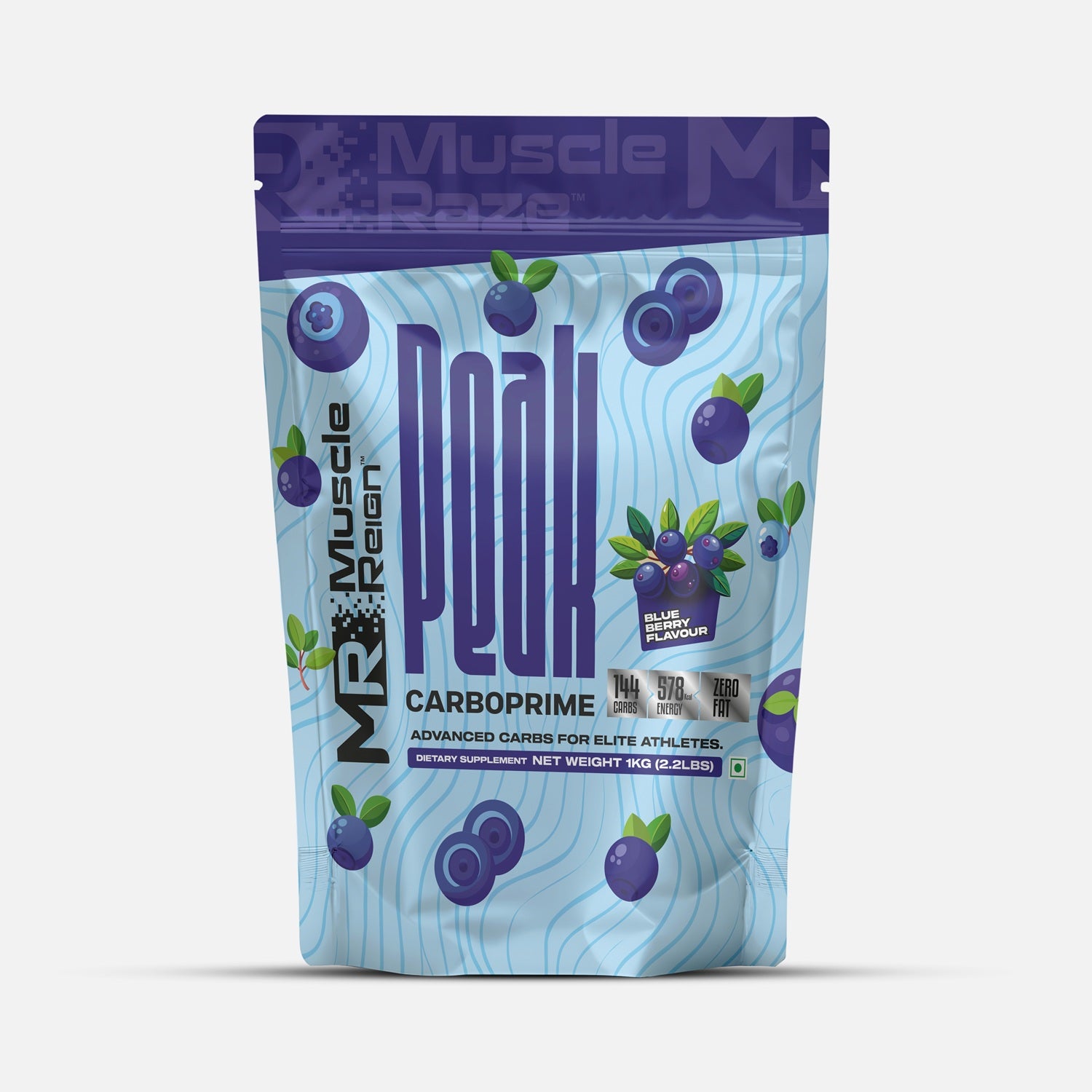
Muscle Reign Peak Carboprime is formulated around 144 g of carbohydrates per serving, delivering 578 calories from a zero-fat carbohydrate matrix specifically structured for the pre- and post-workout windows. The absence of fat in the formula is deliberate — fat slows gastric emptying, which reduces the speed of carbohydrate absorption in the windows where absorption rate matters most. The flavour range — Chocolate, Mango, Blueberry, Candy Ice Cream, and Pineapple — gives enough variety that you are not locked into a single flavour rotation across a training month.
The insider detail that most people miss: Carboprime's post-workout application works best when the serving is taken in the changing room before you leave the gym, not when you get home. The difference between taking it at 8:00 PM versus 9:30 PM after dinner is the difference between glycogen resynthesis running at peak rate through your sleep and running at a fraction of that rate. Sleep is your primary growth window. What you do in the 30 minutes before the commute home determines how productively that window runs.
The Honest Answer
The reason carbohydrates got blamed for fat gain is simple: they are the easiest macronutrient to overconsume because they are everywhere in Indian food, and excess calories from any source produce fat. But that is a portion problem, not a carbohydrate problem. The athlete who is training hard four times a week and struggling to recover, struggling to progress, and wondering why their sessions keep stalling — that person is almost never over-carbed. They are under-fuelled at the specific times when fuel is most needed. That distinction is the difference between training that builds something and training that just burns time.
FAQ
What does a carbohydrate supplement for performance actually do that food cannot?
The primary advantage is absorption speed and timing precision. A carbohydrate supplement in the post-workout window delivers fast-absorbing glucose that drives glycogen resynthesis at its maximum rate within minutes. A home-cooked meal eaten 60–90 minutes later contains the same carbohydrates but misses the window where resynthesis rate is highest by a significant margin.
When is the best time to take pre-workout carbs for muscle gain?
Twenty to thirty minutes before training is the optimal window for pre-workout carbohydrate intake. This gives enough time for absorption and blood glucose elevation without causing gastrointestinal discomfort mid-session. Evening trainers who have not eaten since lunch will benefit most, since their glycogen is partially depleted before the session even begins.
Is glycogen replenishment after workout relevant for someone who only trains 3 days a week?
Yes — and it matters differently. Training 3 days a week means 48+ hours between sessions, which gives more passive recovery time. But passive recovery does not restore glycogen at the same rate as actively addressing it with carbohydrate intake in the post-workout window. Even with rest days, starting your next session with fully restored glycogen versus partially restored glycogen produces meaningfully different output.
Can I use Peak Carboprime alongside a mass gainer, or is that too many carbohydrates?
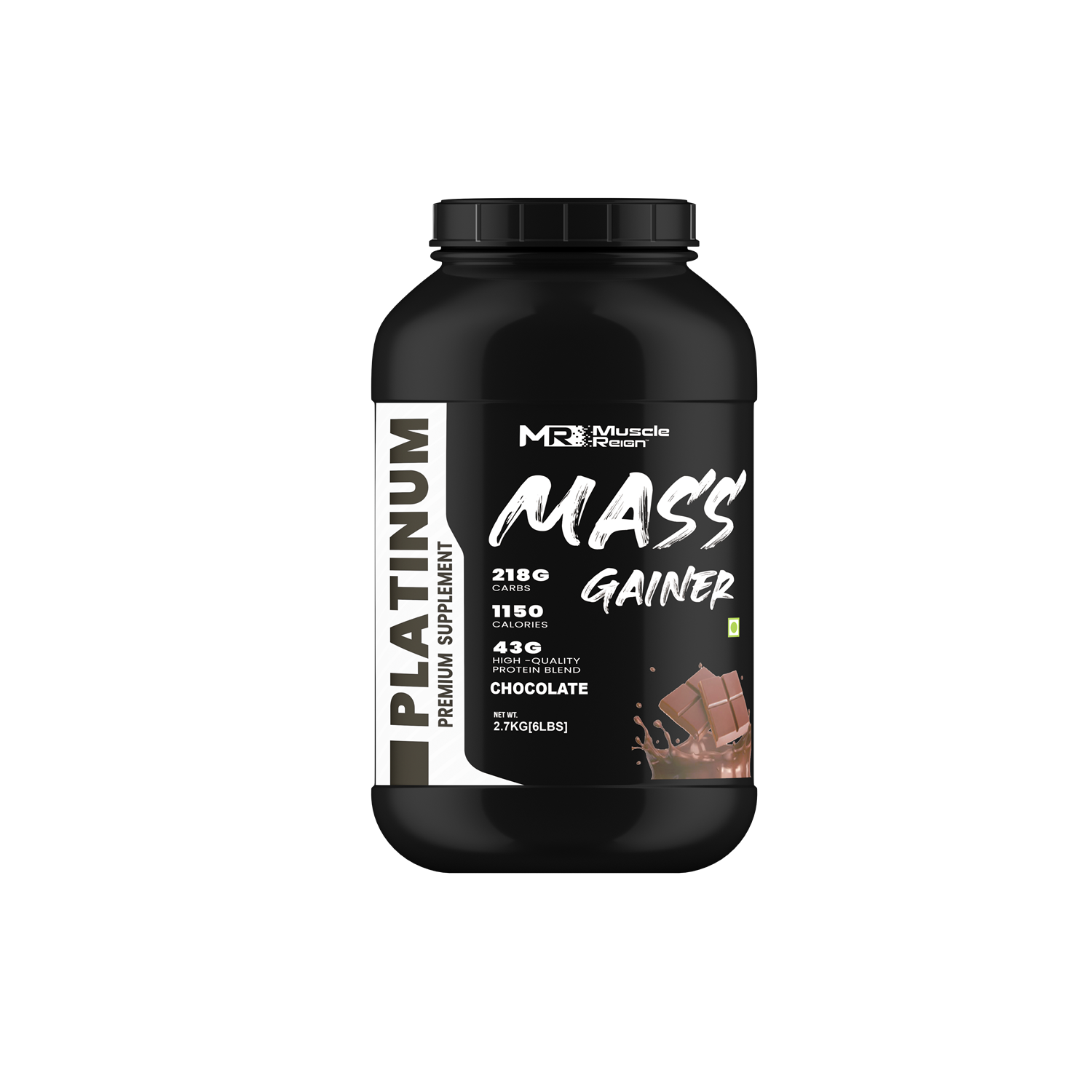
The question to ask is not whether it is too many carbohydrates in total — it is whether both are being used at the right times. Peak Carboprime is for the peri-workout window. A mass gainer is typically for a meal-replacement calorie context. If your training demands it and your calorie targets support it, they are not redundant. Hard gainers running high-volume training blocks can genuinely use both without overlap.
Does Peak Carboprime work for vegetarian and vegan athletes?
Yes. The formula is carbohydrate-based with no animal-derived ingredients in the carbohydrate matrix. For vegetarian Indian athletes who already get adequate dietary protein from paneer, dal, and whey, Carboprime fills the specific gap that plant-heavy Indian diets often leave — fast-absorbing, low-fibre carbohydrates in the peri-workout window, which whole food sources like rice and roti do not deliver at the required absorption speed.