The Mass Gainer for Muscle Gain Nobody in Indian Fitness Is Talking About Honestly
Walk into any gym in Noida, Pune, or Bengaluru and ask ten people what they think about mass gainers. At least six will say the same thing: "Bhai, sirf fat badhata hai." The other four will say their coach told them to just eat more dal-chawal and not waste money on supplements. Almost none of them will be eating enough calories to actually build muscle at any meaningful rate — and almost none of them will connect that gap to why they have been the same size for the last eight months.
The conversation around mass gainers for muscle gain in India is stuck between two bad takes. On one side, there is the fear that any high-calorie supplement automatically converts to fat. On the other, there is the belief that a clean Indian diet covers everything and supplements are a shortcut for people who cannot commit. Both of these positions sound reasonable. Both of them are wrong in ways that cost serious gym-goers real progress.
The actual problem is simpler and more frustrating: building muscle requires a sustained caloric surplus, and most working Indians — eating two main meals a day, commuting two hours, managing irregular schedules — are chronically under-eating relative to what their training demands. A mass gainer is not a magic product. It is a delivery mechanism for calories and nutrients that your lifestyle is consistently failing to provide.
Myths Worth Dropping
Myth: Mass gainers make you fat regardless of how you train.
Reality: Fat accumulation is determined by total calorie balance and activity level, not by supplement format. A 2021 review in the Journal of Strength and Conditioning Research found that calorie surplus combined with progressive resistance training produced significantly more lean mass than fat mass in trained individuals — regardless of whether surplus calories came from food or supplements. The supplement does not decide your body composition. Your training and total intake do.
Myth: You can build muscle on a normal Indian diet without tracking calories.
Reality: A standard Indian meal — dal, two rotis, sabzi — delivers roughly 400–500 calories. Three such meals gives you 1,200–1,500 calories, which for a 70–80 kg male training hard is a maintenance deficit, not a surplus. Hard gainers are often eating what feels like a lot while actually being 500–700 calories short of what muscle synthesis requires.
Myth: Carbohydrates are the enemy of a clean bulk.
Reality: Carbohydrates are the primary driver of muscle glycogen replenishment after training. Without adequate glycogen, your next session starts compromised — reduced strength output, earlier fatigue, and slower recovery. Clean bulking is not low-carb bulking. It is structured, progressive calorie increase with carbohydrates doing the fuel work they are designed to do.
Myth: Whey protein does the same job as a mass gainer.
Reality: Whey protein solves a protein gap. A mass gainer solves a calorie gap. For someone eating 1,400 calories and needing 2,800 to grow, adding 30 g of whey protein gets them to roughly 1,520 calories — still 1,280 short. A well-formulated mass gainer closes that gap in a format that is digestible, timed, and predictable.
Myth: Mass gainers are only relevant for underweight beginners.
Reality: Intermediate lifters who have stalled — not because of poor programming, but because recovery is being outpaced by caloric demand — are often the people who benefit most. Once training intensity increases past a certain threshold, food volume requirements scale faster than most people expect.
What the Research Actually Shows
A Calorie Surplus Is Non-Negotiable for Hypertrophy
The mechanism here is not complicated, but it is consistently underestimated. Muscle protein synthesis requires energy — not just amino acids, but actual caloric availability. A 2022 meta-analysis in Sports Medicine confirmed that individuals in a calorie deficit showed significantly blunted hypertrophic response to resistance training, even when protein intake was adequate. This is the critical distinction: you can eat your protein target and still not grow if your total energy intake is too low. For Indian hard gainers specifically, this is the most common and most fixable reason for stalled progress.
Post-Workout Glycogen Restoration Drives Recovery Rate
Muscle glycogen — the stored carbohydrate in your muscle tissue — is depleted during resistance training and needs to be restored before the next session. A 2020 paper in the International Journal of Sport Nutrition and Exercise Metabolism found that co-ingestion of carbohydrates and protein post-workout accelerated glycogen resynthesis by up to 40% compared to protein alone. For the Indian gym-goer training evenings and eating dinner two hours later, that restoration window is often missed entirely. A post-workout mass gainer serving bridges that gap in the window that matters most.
Consistent Calorie Exposure Matters More Than Perfect Timing
One of the most practical findings in recent sports nutrition research is that total weekly caloric consistency outperforms day-to-day timing optimisation for muscle growth. A 2023 review in Nutrients found that individuals who maintained a consistent calorie surplus across the week — even without perfect pre- and post-workout meal timing — showed better lean mass accrual than those who ate in extreme patterns of undereating on rest days and overeating on training days. For the Indian working professional whose meal schedule varies by the day, this is genuinely good news: sustainable consistency beats perfect protocol.
What This Means for Your Training Day
The goal is to stop treating calories as something you remember to think about only when you are already full or already hungry. For a hard gainer trying to add size, calories need to be planned around the day's structure the same way meetings are.
7:30 AM — Breakfast
Eggs, paratha, or poha with some peanut butter on the side. This should be your first real meal, not a biscuit eaten while answering emails. Aim for 500–600 calories here.
1:00–1:30 PM — Lunch
Dal-rice, rajma-chawal, or whatever the canteen offers — but make it a full plate, not a half portion eaten in 10 minutes. This is your second calorie anchor.
5:00 PM — Pre-Gym Snack
A banana, some roasted chana, or a handful of nuts with a glass of milk. Small but important — this keeps blood glucose stable for the session ahead.
Post-Training — Within 45 Minutes
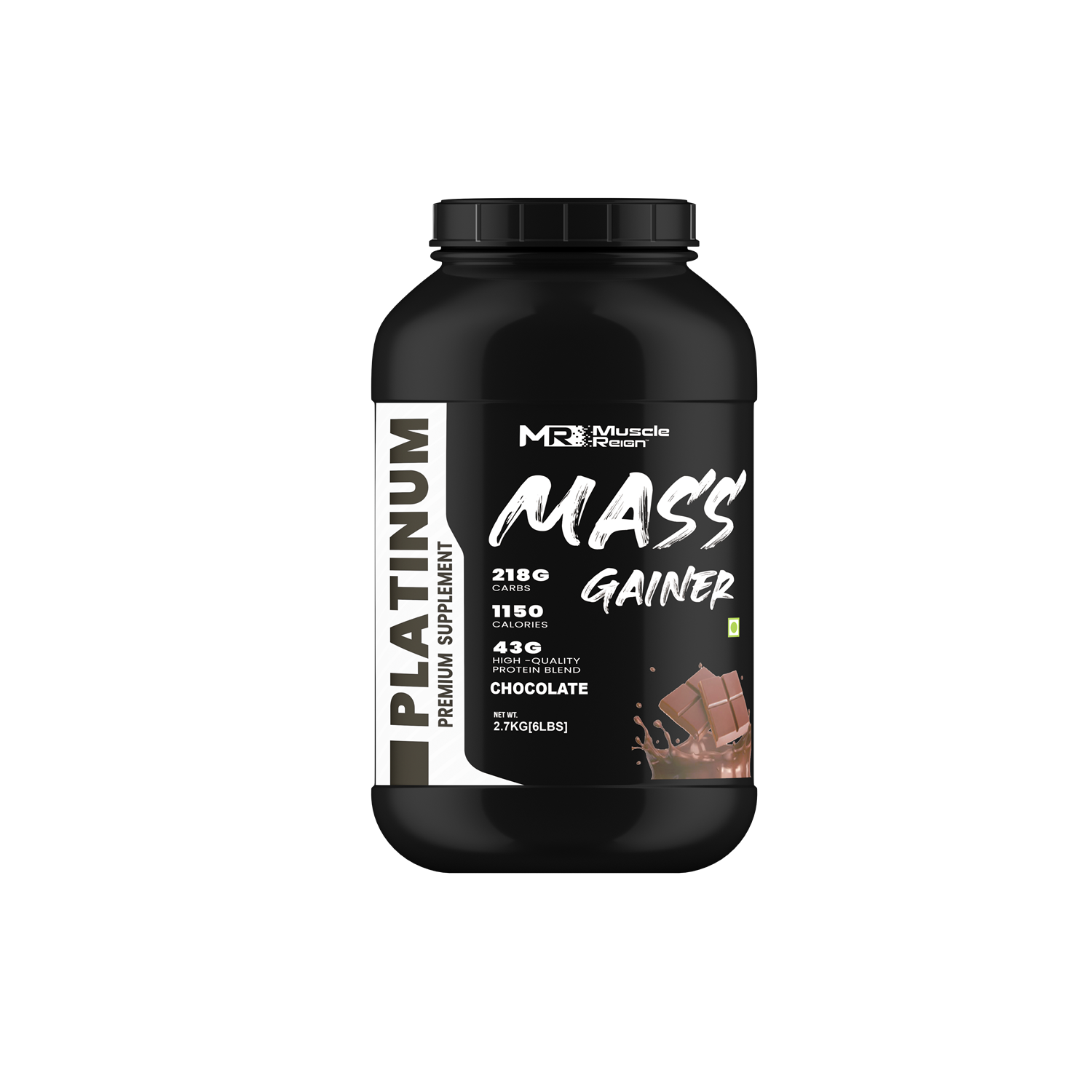
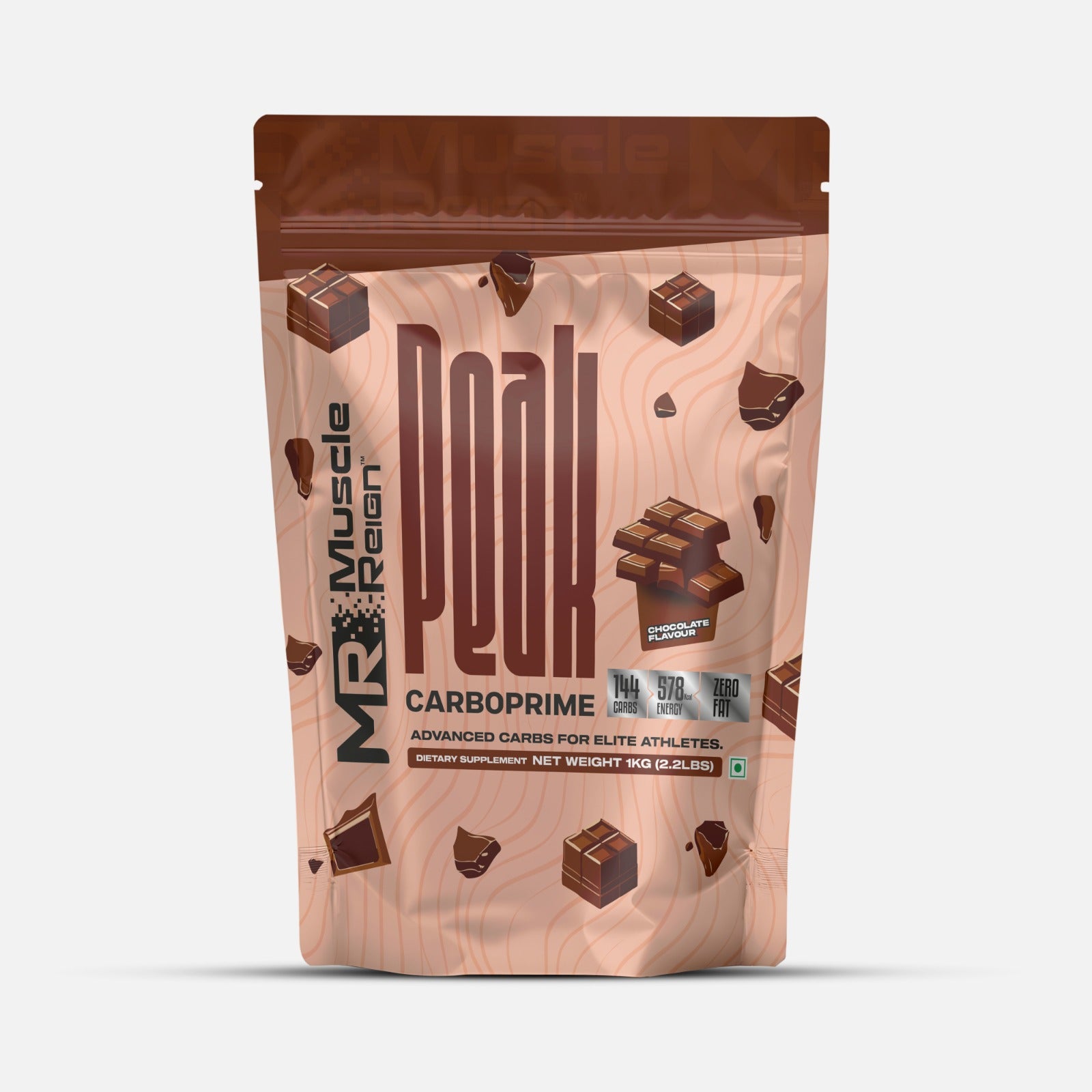
This is the most important window for someone in a clean bulk phase. One serving of Muscle Reign Peak Prime Bulk mixed in 350–400 ml of full-fat milk gives you the carbohydrates to begin glycogen restoration immediately, the protein to start muscle repair, and the caloric load that makes the difference between a day in surplus and a day in deficit. If milk feels heavy after training, cold water works — but milk adds meaningful calories that matter when you are trying to grow.
9:00–9:30 PM — Dinner
A full meal. Roti or rice, dal or sabzi, some curd or paneer if possible. This is your body's longest recovery window — the overnight fast that follows — so do not eat light here.
When Food Volume Becomes the Bottleneck
The honest problem with trying to build mass purely through whole food in India is appetite. Dal-chawal is filling. Three rotis feel heavy. By 7 PM after a long day and a hard session, many people physically cannot eat enough to cover what they have spent. This is not weakness — it is physiology. High-fibre, high-water-content foods create satiety before calorie targets are met.
Muscle Reign Peak Prime Bulk is formulated specifically for this bottleneck. The calorie density is high enough to contribute meaningfully to a surplus without requiring you to sit down to a fourth full meal. The carbohydrate profile is structured for post-workout glycogen use, not just calorie padding. And because it comes in a format you mix and drink in five minutes, it fits into the 45-minute post-workout window that most people lose to commuting home before they can eat.
The usage detail most people miss: do not take it in water if you are genuinely trying to gain. Milk adds 150 calories and meaningful calcium and fat that support the hormonal environment for muscle growth — specifically testosterone and IGF-1 production, both of which are fat-dependent. This is not a minor point. Consistently taking your mass gainer in water when you could take it in milk is leaving 1,000+ calories on the table per week.
The reason mass gainers have a bad reputation in India is not the products — it is the context. Someone who is sedentary, eating three full meals, and adding a 600-calorie shake on top will gain fat. That is not a supplement problem; that is a maths problem. For a hard gainer training seriously four times a week and chronically under-eating relative to what that training demands, a mass gainer is not excess — it is the gap between what the day provided and what the body needed. Knowing which situation you are in is the only judgement call that actually matters.
FAQ
Is a mass gainer for muscle gain different from a regular weight gain supplement?
The distinction matters. A mass gainer designed for muscle gain prioritises a protein-to-carbohydrate ratio that supports training recovery — typically with 25–30 g of protein per serving and carbohydrates calibrated for glycogen replenishment. A generic weight gain supplement may simply be high-calorie without the protein architecture needed for actual muscle growth. Check the protein content before buying anything.
How much of a calorie surplus do I actually need for clean bulking in India?
Research supports a modest surplus of 200–500 calories above maintenance for lean muscle gain. Aggressive surpluses above 700 calories tend to increase fat accumulation without proportionally increasing muscle growth rate. For most Indian gym-goers with desk jobs, maintenance sits around 2,200–2,500 calories — meaning a clean bulk target of 2,500–2,800 is usually sufficient. Most hard gainers are not even hitting maintenance.
Can I use a mass gainer on rest days too?
Yes — and this is where most people make the mistake of stopping. Muscle repair and glycogen restoration happen primarily on rest days, not during the session itself. Cutting calories sharply on non-training days disrupts the recovery process your training initiated. A half serving on rest days keeps the caloric environment consistent without unnecessary excess.
What is the best mass gainer in India for a vegetarian diet?
Look for formulas that use a blend of whey concentrate and isolate for the protein component, ensuring both fast and sustained amino acid delivery. Peak Prime Bulk fits this profile and is suitable for lacto-vegetarians. The carbohydrate source matters too — oat-based or complex carbohydrate matrices are preferable to maltodextrin-heavy formulations for digestive comfort and glycaemic response.
Does taking a mass gainer alongside creatine cause any issues?
No. They operate on entirely separate mechanisms — creatine supports phosphocreatine resynthesis for strength and power output, while a mass gainer addresses calorie and macronutrient intake. Many intermediate lifters run both simultaneously as part of a structured bulk phase, and there is no competition or interference between them at any practical dose.