Why You Feel Strong in the First Half of Your Workout but Crash Near the End
Your first three exercises feel sharp - good weight, good focus, reps that move the way they're supposed to. Then somewhere around the halfway mark, something shifts. The bar feels heavier than it should, your concentration drifts, and the last two exercises turn into a fight just to finish the session. If this happens most sessions, not occasionally, it's not bad luck. It's a specific, diagnosable pattern - and it's rarely just "not enough sleep."
Why It Matters: A Mid-Workout Crash Has a Handful of Real Causes
Fatigue that shows up gradually across a session, rather than all at once, is usually driven by one of a small number of overlapping systems running low at the same time: blood glucose, hydration and electrolytes, central nervous system fatigue, or a stimulant wearing off on schedule. These aren't interchangeable explanations - each one has a distinct pattern, and figuring out which one is yours changes what actually fixes it.
Myths Worth Dropping
| Myth | Reality |
|---|---|
| Feeling strong early and crashing late just means you didn't warm up properly | A proper warm-up affects the first few minutes, not the back half of an hour-long session; a mid-session crash points to a fuel, hydration, or central fatigue issue rather than warm-up quality |
| Crashing mid-workout means you're simply out of shape | Even well-conditioned, trained individuals experience measurable performance decline when blood glucose or hydration status declines during a session - conditioning affects how hard you can push, not whether these systems can run low |
| It's "all in your head" if the weight feels heavier but you could technically lift it | Central fatigue is a real, measurable phenomenon - a progressive reduction in the nervous system's ability to fully activate a muscle - and it can precede any visible drop in physical performance |
| Drinking water alone should prevent any mid-session fatigue | Sweat losses include sodium and other electrolytes alongside fluid; hydration and electrolyte status are related but separate problems, and replacing only one doesn't fully solve either |
| If your pre-workout "wore off," that's just in your imagination | Caffeine has a defined half-life, and a stimulant taken 30–40 minutes before training can genuinely be declining in blood concentration by the time you're deep into a longer session |
The Real Causes, One at a Time
1. Blood Glucose Declining Through the Session
Without carbohydrate intake during a session, blood glucose levels decline progressively as liver glycogen depletes and the body struggles to keep pace through gluconeogenesis alone. Lower blood glucose availability directly reduces the rate at which your muscles can use carbohydrate for fuel - and because glucose is a key fuel source for the brain as well, it also affects focus and drive, not just muscle output. This is the classic pattern behind a crash that arrives gradually around the 45–75 minute mark of a demanding session, particularly if the last meal was several hours earlier.
2. Dehydration and Electrolyte Loss
Even mild dehydration forces the heart to work harder to circulate oxygenated blood, leaving muscles functioning less efficiently and contributing to that dizzy, sluggish, "done" feeling well before a session should reasonably end. Sweat carries sodium and other electrolytes out alongside fluid, and replacing water without replacing what was actually lost in sweat leaves part of the problem unaddressed - particularly in a warm gym, on a longer session, or on a heavier-sweating training day.
3. Central Fatigue - Your Nervous System, Not Just Your Muscles
Central fatigue is a progressive failure to fully voluntarily activate a muscle, distinct from the muscle itself being physically unable to contract. It's associated with reduced nerve impulses and neuronal excitability, and research indicates it can appear before any visible decline in physical output - meaning a set can feel noticeably harder to push through well before your actual strength has dropped. Carbohydrate availability plays a direct role here too: adequate intake during exercise reduces the release of free tryptophan into the blood, which otherwise can raise brain serotonin and contribute to that heavy, unmotivated feeling associated with central fatigue.
4. Your Pre-Workout Wearing Off on Schedule
If you took a stimulant-based pre-workout 20–30 minutes before your warm-up, its peak effect is roughly aligned with your first few working sets - and it's already declining by the time you're deep into a session running past 60–75 minutes. A crash that shows up at a consistent point in the session, roughly correlated to how long ago you took your pre-workout, points here specifically rather than to glycogen or hydration.
5. Front-Loading Your Hardest Work Without Managing Pace
Starting with your heaviest compound lift and working down through progressively lighter accessory work means your nervous system is taking its biggest hit early, while your later exercises are asking for continued output from an already-taxed system. This isn't wrong programming by default, but it does mean a "crash" late in the session can partly be the accumulated cost of the earlier heavy work, not a separate, isolated problem.
Telling These Apart: A Quick Pattern Check
| If your crash... | It's most likely... |
|---|---|
| Arrives gradually, worse toward the back half, worse on days you trained fasted or with a light meal | Blood glucose decline |
| Comes with dizziness, headache, or a "heavy" feeling that started building early | Dehydration / electrolyte loss |
| Feels like the weight is mentally harder to push, not just physically heavier | Central fatigue |
| Lines up almost exactly with roughly an hour after your pre-workout dose | Stimulant wearing off |
| Only shows up on days with a brutal first exercise or unusually heavy opener | Pacing / exercise order |
Most people are dealing with some combination of two or three of these, not just one - which is why "drink more water" alone often doesn't fully fix it.
What Actually Helps
- For blood glucose: a carbohydrate source before training if your last meal was several hours out, and intra-workout carbohydrate on sessions running past 75–90 minutes.
- For hydration and electrolytes: sip fluids with sodium and potassium through the session, not just water - particularly on longer or warmer sessions.
- For central fatigue: the same carbohydrate strategy helps here too, since adequate carb availability during exercise appears to blunt the pathway linked to that heavy, unmotivated feeling.
- For a fading stimulant: shift your pre-workout timing later relative to your hardest sets, or accept that a longer session may need its energy support distributed rather than front-loaded in one dose.
- For pacing: reorder accessory work so your most demanding compound lifts aren't unnecessarily stacked at the very start of a long session.
How Muscle Reign Fits Into This
Because the crash usually isn't one problem, a single-mechanism fix often falls short. READY Instant Energy Formula was built around this exact multi-cause pattern - it combines fast carbohydrate to address the glucose side, a sodium-potassium electrolyte blend to cover what sweat has actually removed, and amino acid support, in one serving you can sip through the session rather than front-loading everything into a single pre-workout dose. For sessions running past the point where a 20-minutes-before pre-workout dose has already peaked, this is the more appropriate tool than reaching for another scoop of stimulant.
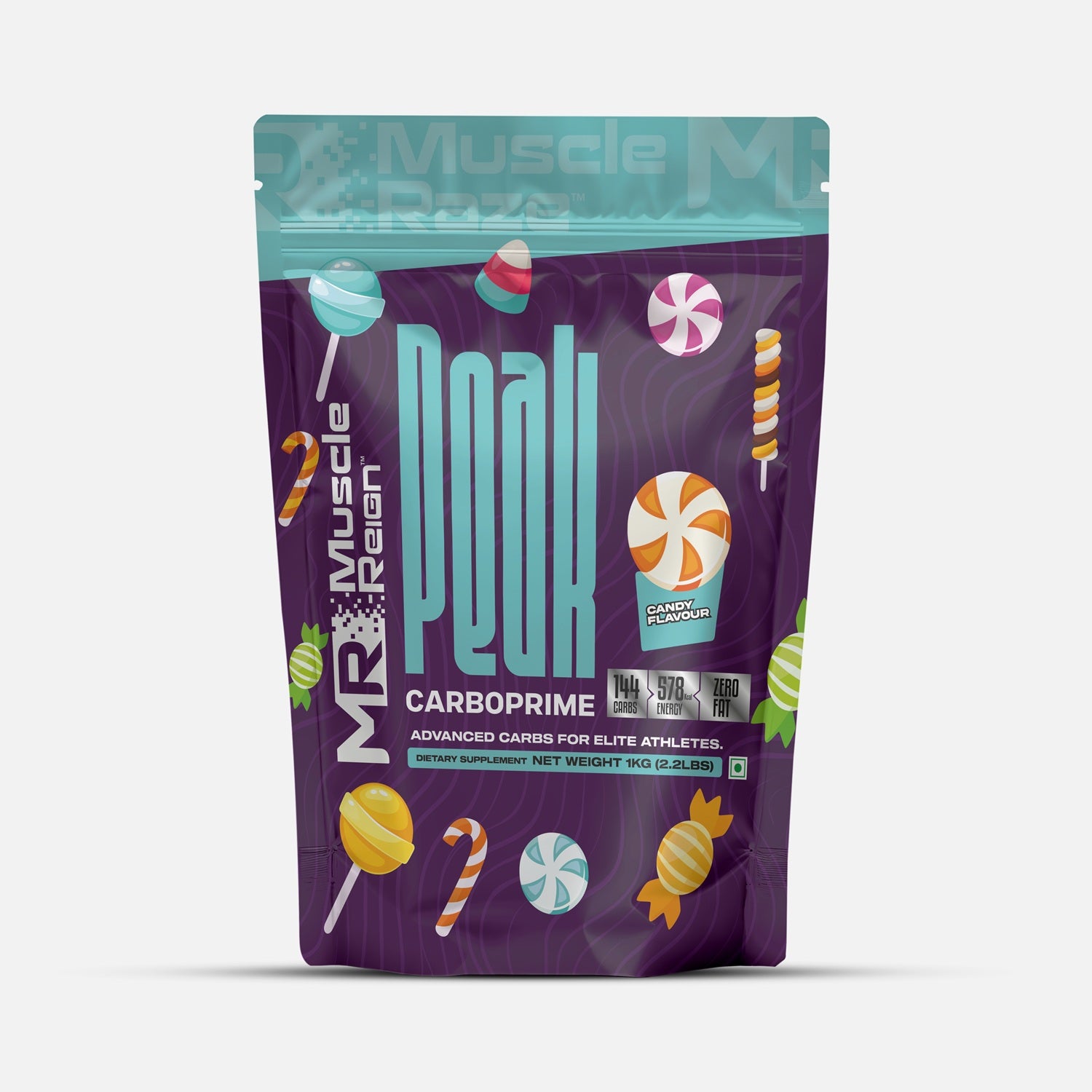
For the specific glucose-and-glycogen side of a long or demanding session, Peak Carboprime works well split - a portion pre-workout, a portion during or immediately after - to keep carbohydrate availability from dropping off through the back half.
Common Mistakes People Make
- Assuming every mid-session crash is a warm-up or conditioning problem
- Drinking only water and not addressing electrolyte loss separately
- Taking a single pre-workout dose and expecting it to cover a session well past 90 minutes
- Front-loading the heaviest compound work without accounting for the cumulative cost on later exercises
- Not eating anything for hours before training and expecting the crash not to happen
Possible Considerations
A crash that includes dizziness, confusion, nausea, or unusual heart rate changes during training warrants stopping the session and seeking medical attention rather than pushing through - these can indicate more than routine fatigue. Anyone with diabetes or a blood sugar regulation condition should consult a physician regarding pre- and intra-workout carbohydrate strategy specifically. Persistent, severe mid-session fatigue that doesn't respond to addressing food, hydration, and pacing may warrant a broader look at sleep, training volume, or overall recovery.
Frequently Asked Questions
Why do I feel strong at the start of my workout but weak by the end? Most commonly it's declining blood glucose, dehydration or electrolyte loss, central nervous system fatigue, or a pre-workout stimulant wearing off - often some combination of two or three, rather than a single isolated cause.
Is it normal for the last few sets of a workout to feel much harder than the first? Some decline across a session is normal, especially on heavier training days. A crash severe enough to compromise form or force you to cut a session short consistently isn't - that's worth diagnosing rather than accepting.
Does drinking more water fix a mid-workout crash? It can help if dehydration is the main driver, but sweat also carries sodium and other electrolytes; replacing fluid without electrolytes leaves part of the problem unaddressed, particularly on longer or warmer sessions.
Can my pre-workout actually wear off before my session ends? Yes. Caffeine has a defined half-life, and a dose taken 20–30 minutes before training peaks early in a session - by the time you're 60–90 minutes in, its concentration has meaningfully declined.
Is a mid-workout crash "all in my head"? No - central fatigue is a measurable reduction in the nervous system's ability to fully activate a muscle, and it can genuinely make a weight feel harder before any actual strength has dropped. It's a real physiological phenomenon, not a lack of willpower.
Should I eat something during my workout if I keep crashing? If your crash tracks with session length past 75–90 minutes, or your last meal was several hours before training, intra-workout carbohydrate is one of the more directly evidence-supported fixes for that specific pattern.
How do I know if it's blood sugar or dehydration causing my crash? Blood sugar crashes tend to build gradually and correlate with how long it's been since you last ate; dehydration crashes often come with dizziness, headache, or a heavier overall feeling that starts earlier and doesn't clearly track with meal timing.
The Honest Answer
A mid-workout crash isn't a mystery or a willpower failure - it's usually one or two identifiable systems (blood glucose, hydration, a fading stimulant, or genuine central fatigue) running out ahead of your session, not alongside it. The fix isn't training through it harder. It's matching what you're taking in - carbohydrate, fluid, electrolytes, and stimulant timing - to how long and how hard the session actually is.
Ready to Finish Your Sessions the Way You Started Them?
Explore Muscle Reign's READY Instant Energy Formula and Peak Carboprime at www\.musclereign.com and stop letting the back half of your workout undo the front half.