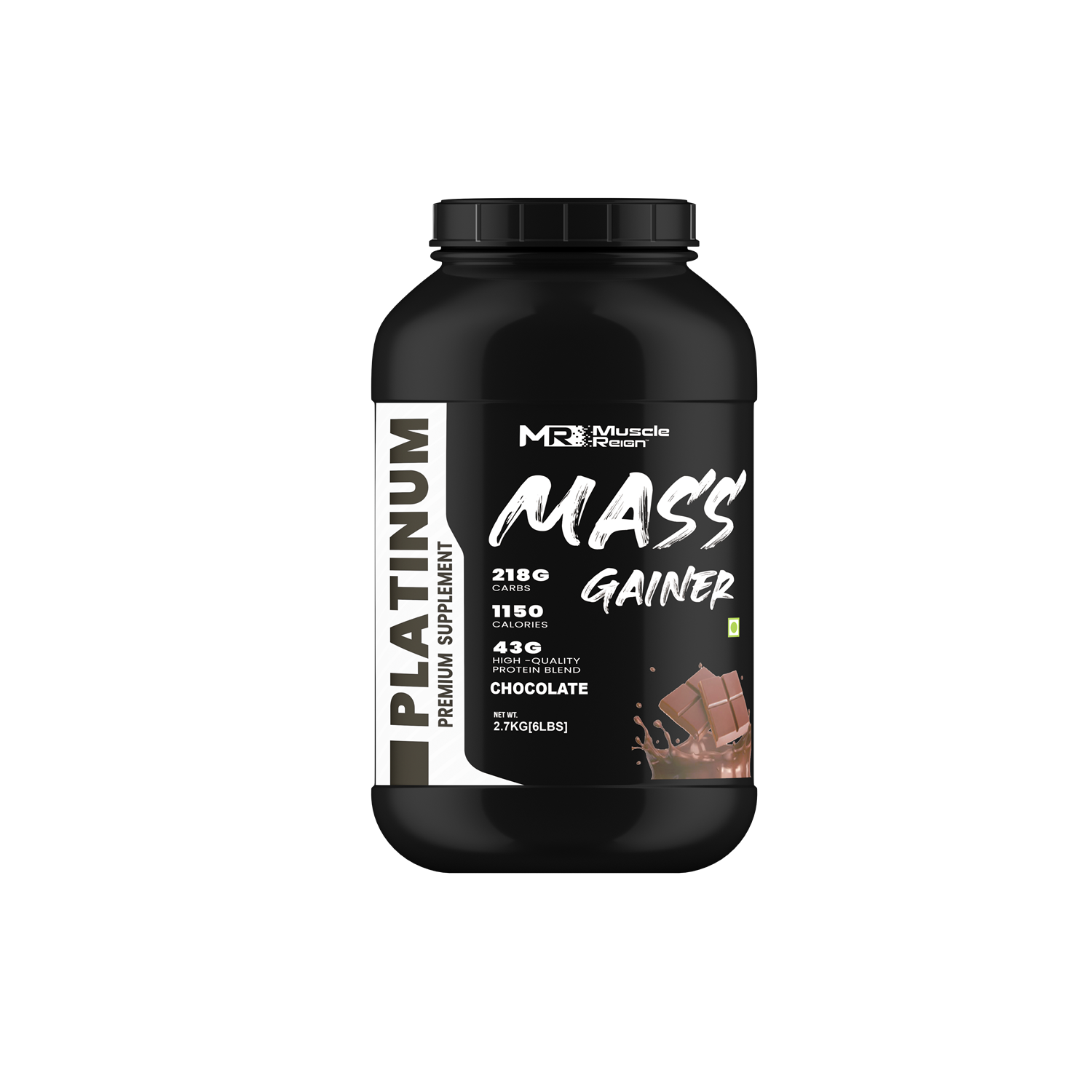
It starts the same way in every gym - Janakpuri, Koramangala, Salt Lake City, it doesn't matter. A new guy has been training hard for three months. He's disciplined. He's consistent. He's eating what his mother approves of and doing every exercise his senior taught him. But he isn't growing the way he expected. Someone suggests protein. His cousin, who has never lifted a weight in his life, immediately intervenes: "Woh sab supplements hote hain yaar. Steroids se bana hota hai. Kidney kharab ho jaati hai."
And with that one conversation - repeated in thousands of Indian gyms every single day - another serious lifter walks away from the one tool most likely to actually close the gap between effort and result.
The powerful truth is this: supplements are not steroids, they are not dangerous for healthy adults, and the mythology surrounding them in India has its roots in fear, not physiology. What's actually transforming Indian gyms right now isn't a new training method or a new diet trend - it's the growing number of lifters who have stopped letting that mythology make decisions for them.
Myths Worth Dropping
Myth 1: Supplements are made from steroids or contain them.
Reality: Whey protein is the liquid byproduct of paneer and cheese production - it's dairy, purified and dried. Steroids are synthetic hormones designed to alter your endocrine system. One is food. The other is a pharmaceutical. They share nothing in common except a bad reputation by association.
Myth 2: Your kidneys will be damaged by regular protein intake.
Reality: This claim traces back to studies on patients with pre-existing renal disease - not healthy adults. The International Society of Sports Nutrition's position stand confirms that protein intakes of 1.6-2.2g per kg of bodyweight show no adverse kidney effects in healthy individuals. If your kidneys are functioning normally, this is not your risk.
Myth 3: Once you start supplements, you can never stop.
Reality: Muscle doesn't evaporate when you stop using protein powder. What determines whether you keep your muscle is total daily protein intake and continued resistance training - not the delivery mechanism. Replace the shake with enough eggs, dal, or chicken and your physiology notices no difference.
Myth 4: Supplements are only for people who want to get unnaturally big.
Reality: The average Indian professional eating three meals around a desk job, a commute, and erratic canteen food is routinely 40-60g short of the protein their training demands. That shortfall doesn't build a bodybuilder physique - it just means months of hard work produce less than half the result they should.
Myth 5: Natural training means avoiding all supplements.
Reality: "Natural" in fitness means no performance-enhancing drugs - anabolic steroids, growth hormone, SARMs. Protein, creatine, and vitamins are nutritional tools. Every elite natural athlete on the planet uses them. The distinction has always been about hormonal manipulation, never about closing a dietary gap.
What the Research Actually Shows
Total Daily Protein Is the Variable That Moves the Needle
A 2022 meta-analysis published in the British Journal of Sports Medicine confirmed what decades of individual studies had been pointing toward: total daily protein intake, not meal timing or protein source, is the primary driver of lean mass gain during resistance training. The target - 1.6 to 2.2g per kg of bodyweight per day - is where results live. For a 75kg Indian male training four days a week, that's 120-165g of protein daily. A serving of dal gives roughly 9g. A standard canteen chicken dish gives 25-30g. The math, for most working Indians, does not resolve without supplementation.
Creatine Is the Most Researched Legal Performance Tool in Existence
No supplement has more evidence behind it than creatine monohydrate. A comprehensive 2021 review in Nutrients covering over 500 studies found consistent strength gains of 5-15% in resistance-trained individuals using just 3-5g daily. It works by increasing phosphocreatine availability in muscle cells, which extends your capacity for high-intensity effort - the exact kind needed to drive progressive overload in compound lifts. It contains no hormones. It does not alter testosterone. It is, chemically, a compound your own liver already synthesises from amino acids found in your food. For whey protein for Indian diet purposes, creatine is the most powerful legal complement available.
Protein Distribution Across Indian Meal Patterns Determines Absorption Efficiency
Research from Maastricht University, subsequently validated in multiple South Asian dietary studies, shows that spreading protein across 3-4 meals of 20-40g each produces meaningfully better muscle protein synthesis than consuming the same total amount unevenly. The standard Indian eating pattern - chai and toast at 8 AM, heavy lunch at 1 PM, light snack, large dinner at 9 PM - compresses most protein intake into a single late window. Protein powder timing in India, when applied intelligently, is less about the post-workout window mythology and more about correcting that structural imbalance throughout the day.
What This Means for Your Training Day
A realistic Indian training week looks like this: wake at 6:30 or 7, eat minimally before commuting, desk work until evening, gym at 7 or 8 PM, home by 9:30, dinner, sleep. That schedule has two compounding protein problems - a skipped morning window and a dinner that comes too late and too large to optimally support overnight recovery.
Here's a protocol built around those actual conditions:
Morning : Before the commute, not after.
A shake with 25-30g of protein and a banana takes under two minutes to prepare. You've broken the overnight fast, delivered your first protein dose of the day, and left the house. This single habit shift is responsible for more muscle gain in busy Indian professionals than any training programme adjustment.
Lunch :
Eat your full meal - dal, sabzi, roti, rice, curd. Don't cut carbohydrates here. If you have paneer, chicken, or eggs available, prioritise them. You're targeting 25–35g of protein from this meal, which is achievable without overthinking it.
Post-gym :
This is where a supplement earns its spot for practical reasons as much as physiological ones. You're not cooking a full meal. A shake with 25g of protein takes 30 seconds, initiates muscle protein synthesis immediately post-training, and means your dinner - whenever it lands - is an extension of recovery rather than the whole of it.
Also Read :
https://www.musclereign.com/blogs/news/youre-hitting-your-protein-so-why-arent-you-growing
This three-window approach - morning, lunch, post-gym - is where Muscle Reign's Blended ISO Lean sits most naturally. It uses a combination of whey isolate and micellar casein that solves a specific problem the Indian training schedule creates: the need for fast post-workout protein that doesn't wear off before a late dinner is digested. The isolate fraction acts immediately on muscle protein synthesis; the casein fraction extends the anabolic environment through the two-hour gap between your shake and your meal.
Why a Blended Protein Fits the Indian Training Schedule Better
The case for a blended protein over a pure isolate or a pure casein starts with one practical reality: most Indian gym-goers are finishing training at 9 PM and eating dinner at 10 or 10:30. A pure whey isolate absorbs in roughly 90 minutes - which means by the time dinner arrives, the anabolic window from your shake has already closed. A pure casein absorbs over 5–7 hours - which is excellent for overnight recovery but uncomfortably filling when you still have a full dinner ahead.
A 70/30 whey isolate-to-casein blend threads that needle precisely. The isolate does its acute post-training work; the casein bridges the gap to dinner and extends into sleep without making you feel like you've swallowed cement. One usage detail that makes a real difference: mix Blended ISO Lean with cold water rather than milk. Milk contains its own casein, which shifts the absorption profile too far toward slow-digesting and defeats the purpose of having the isolate fraction at all. Cold water, correct ratio, shaken well - that's the version that performs the way the blend is designed to.
Also Read :
https://www.musclereign.com/blogs/news/isolate-vs-concentrate-stop-guessing-start-knowing
The Honest Answer
Every gym myth survives because it offers something - usually the comfort of a simple explanation for a complicated result. "Supplements are steroids" lets people avoid confronting that their diet has a structural problem and their results reflect it. The powerful truth transforming Indian gyms isn't a secret ingredient or a revolutionary protocol. It's the straightforward decision to stop letting inherited fear override basic nutritional science. That decision, made consistently, is what separates the guy still wondering why he isn't growing from the one who quietly got there.
FAQ
Are supplements the same as steroids?
No - they are fundamentally different in composition, mechanism, and effect. Protein supplements are derived from food (whey from dairy, for example) and contain no hormones. Anabolic steroids are synthetic versions of testosterone that alter your hormonal system. Using protein powder is nutritionally equivalent to eating extra paneer or eggs.
What is the best time to take protein powder in India given our meal timing?
For most Indians following a late-gym schedule, the two highest-impact windows are morning (before the commute, to break the overnight fast) and post-gym (immediately after training, before a late dinner). Hitting both windows consistently will do more for your results than any advanced timing strategy.
Is whey protein for Indian diet patterns actually effective?
Yes - and it's particularly effective because the standard Indian diet, built around roti, rice, and vegetable-heavy meals, tends to be protein-light relative to what active training demands. Whey protein slots into Indian meal patterns without requiring any dietary overhaul; it simply closes the gap that whole food sources don't reliably fill.
How much protein do I actually need as an Indian gym-goer?
The evidence-backed range is 1.6 to 2.2g per kilogram of bodyweight per day. For a 70kg person training 4 days a week, that's 112–154g daily. Most Indians eating normal meals hit 60-80g. That gap - 40 to 70g - is exactly what targeted supplementation is designed to address.
Can vegetarian Indians build serious muscle without non-veg protein sources?
Yes, with the right approach. Dairy is an excellent protein source - paneer, curd, and milk are complete proteins with strong bioavailability scores. A lacto-vegetarian diet supplemented with whey or casein (both dairy-derived) can fully support muscle growth at any level of training. Blended ISO Lean is vegetarian-friendly and provides a PDCAAS score equivalent to eggs.
Will I get dependent on supplements if I use them every day?
No. Dependence is a pharmacological concept that applies to substances that alter brain chemistry or hormonal function. Protein powder is food. Using it daily is no more habit-forming than eating curd daily. Stop tomorrow, replace the protein with whole food sources, and your body notices nothing except whether the total protein number was hit.